
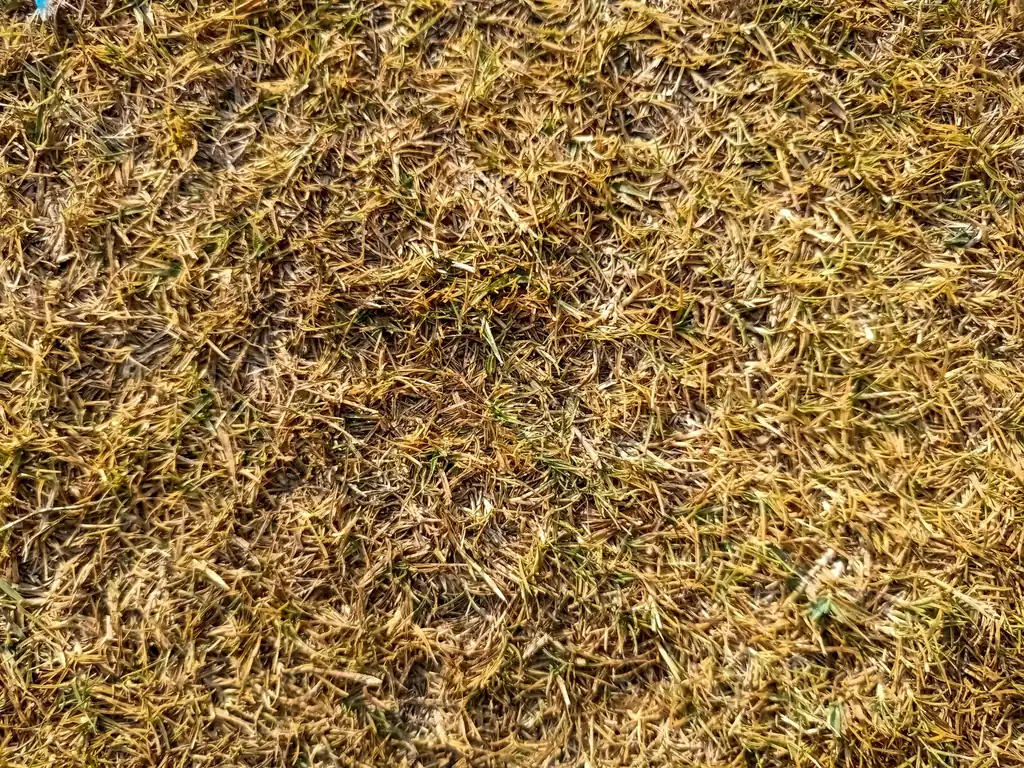
Brown spots, circular patches, yellowing grass... Learn to recognize the most common fungal diseases and how to treat them effectively.
Table of Contents8 sections
Table of Contents
Why Does Your Lawn Get Sick?
Lawn diseases are mainly caused by fungi that take advantage of favorable conditions: excessive moisture, poor air circulation, grass stress, or a nutrient imbalance. The good news is that most can be prevented and treated.
1. Brown Patch (Rhizoctonia solani)
Identification
- Circular patches from 6 inches to 3 feet in diameter
- Dark brown ring on the periphery, sometimes with a green center
- Appears in hot, humid weather (77-86°F)
- Blades pull out easily when tugged
Treatment
- Reduce evening watering
- Improve air circulation (aeration, dethatching)
- Avoid excess nitrogen in the summer
- Thiophanate-methyl based fungicide if necessary
2. Snow Mold (Microdochium nivale)
Identification
- Appears in spring after the snow melts
- Circular patches from 2 to 12 inches, grayish or pinkish
- White or pink mycelium visible early in the morning
- More common under persistent snow piles
Treatment
- Gently rake the affected areas to promote drying
- The grass usually recovers on its own as temperatures rise
- Avoid applying nitrogen fertilizer late in the fall
- Reduce snow depth on the lawn if possible
Help shape what comes next for LawnFan
The app is not available yet. Join the interest list for the beta planned for winter 2026–2027, or choose the newsletter for lawn tips and new articles.
Which signup should I choose?
Beta interest list: For expressing interest in testing the upcoming app. The button opens the form on the home page; invitations and timing will be confirmed later. Access is not guaranteed, and this signup does not subscribe you to the newsletter.
Newsletter: For seasonal tips, articles and project updates by email. The button takes you to the form at the end of this article’s content. You explicitly choose to receive these emails; this does not request beta access.
3. Dollar Spot (Clarireedia jacksonii)
Identification
- Small, round spots the size of a dollar coin (1-2 inches)
- Straw-colored to light brown
- Can merge into larger patches
- Appears when nights are cool and humid
Treatment
- Increase nitrogen fertilization (well-fed grass is more resistant)
- Water in the morning so the grass dries during the day
- Maintain an adequate mowing height
- Preventive fungicide if the problem is recurrent
4. Rust (Puccinia spp.)
Identification
- Orange or yellow powder on the grass blades
- Transfers to shoes and clothing
- Appears in late summer when growth slows
- More common in shade and dry weather
Treatment
- Fertilize to stimulate growth
- Water regularly to maintain vigor
- Mow frequently to remove infected parts
- Improve sun exposure (trim low branches)
5. Red Thread (Laetisaria fuciformis)
Identification
- Red or pink threads visible on grass blades
- Irregular patches of yellowing grass
- Appears in cool, humid weather (59-77°F)
- Often linked to a lack of nitrogen
Treatment
- Application of nitrogen fertilizer (most effective treatment)
- Improve drainage if the soil remains wet
- Aerate to improve air circulation
- Fungicide is rarely needed
Prevention: Your Best Weapon
The majority of lawn diseases can be avoided by following these best practices:
- Water in the morning: the grass dries during the day
- Maintain balanced fertilization: not too much, not too little
- Aerate annually: improves drainage and air circulation
- Sharpen your blades: clean cuts reduce entry points for disease
- Vary the species: a mix of grasses is more resistant
- Dethatch if necessary: thatch retains moisture
When to Consult a Professional?
If the disease persists or spreads rapidly despite your efforts, consult a lawn care specialist. Some diseases require a precise diagnosis and targeted treatment.
LawnFan's AI can help you identify your lawn's diseases from photos and recommend the appropriate treatment.