
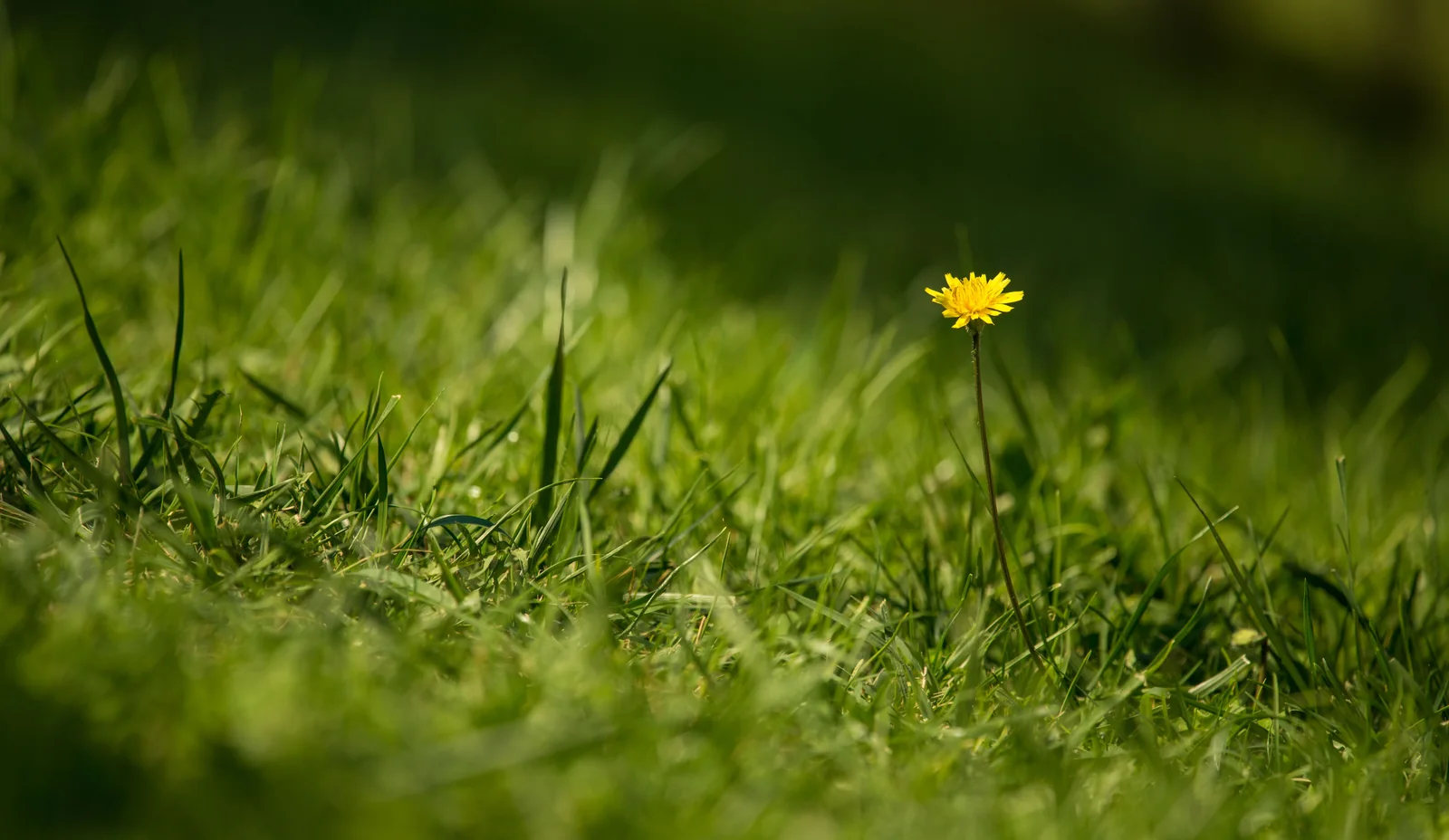
Dandelions, clover, plantain... Are weeds taking over your lawn? Discover ecological and sustainable solutions to control them without chemical products.
Table of Contents6 sections
Table of Contents
Rethinking Weeds
Before declaring war on weeds, it's important to understand why they appear. Their presence is often a symptom of an underlying problem: compacted soil, unbalanced pH, a sparse lawn, or poor maintenance practices.
The Best Defense: A Dense Lawn
A thick, vigorous lawn is the best barrier against weeds. When the grass takes up all the space, there's no room left for unwanted plants. Focus on:
- Regular overseeding: fill in sparse areas every fall
- Adequate fertilization: a well-fed lawn is more competitive
- Optimal mowing height: taller grass shades the soil and prevents weed seed germination
- Deep watering: encourages deep grass roots
Natural Control Methods
1. Manual Weeding
The simplest and most eco-friendly method:
- Use a dandelion puller or a weeding knife
- Pull after a rain when the soil is soft
- Remove the entire root (especially for dandelions)
- Fill the hole with topsoil and seeds
2. Horticultural Vinegar
Vinegar with 20% acidity (not kitchen vinegar at 5%) can be effective:
- Apply directly to the leaves of the weeds
- Works best in hot, sunny weather
- Be careful: it also kills grass on contact
- Use a brush or a targeted sprayer
3. Boiling Water
Simple but effective for weeds in cracks and along borders:
- Pour directly onto the plant
- Destroys plant cells with heat
- Requires several applications
- Not suitable for large areas
4. Corn Gluten Meal
A natural pre-emergent herbicide:
- Prevents weed seeds from germinating
- Apply in the spring, 4 to 6 weeks before expected germination
- Does not affect already established plants
- Also adds nitrogen to the soil
5. Competitive Overseeding
Fill empty spaces before weeds do:
- Overseed in early fall (best time)
- Use a mix suitable for your conditions
- Keep the soil moist until germination
Help shape what comes next for LawnFan
The app is not available yet. Join the interest list for the beta planned for winter 2026–2027, or choose the newsletter for lawn tips and new articles.
Which signup should I choose?
Beta interest list: For expressing interest in testing the upcoming app. The button opens the form on the home page; invitations and timing will be confirmed later. Access is not guaranteed, and this signup does not subscribe you to the newsletter.
Newsletter: For seasonal tips, articles and project updates by email. The button takes you to the form at the end of this article’s content. You explicitly choose to receive these emails; this does not request beta access.
Identifying Common Weeds
Dandelion (Taraxacum officinale)
- Serrated leaves in a rosette
- Characteristic yellow flower
- Deep taproot
- Solution: pull it out with the entire root
White Clover (Trifolium repens)
- Three-leaflet leaves
- Round white flowers
- Often indicates a lack of nitrogen
- Solution: fertilize! Clover disappears when the lawn is well-fed
Plantain (Plantago major)
- Broad oval leaves in a rosette
- Very resistant to foot traffic
- Indicates compacted soil
- Solution: aerate the soil and pull manually
Crabgrass (Digitaria spp.)
- Fast-growing annual grass
- Stems that spread along the ground
- Appears in summer in sparse areas
- Solution: corn gluten meal in spring + overseeding in fall
Correcting the Root Causes
| Weed | Likely Cause | Solution |
| Clover | Lack of nitrogen | Fertilize |
| Moss | Acidic soil, shade, moisture | Add lime, improve drainage |
| Plantain | Compacted soil | Aerate |
| Crabgrass | Sparse lawn | Overseed, mow higher |
| Quackgrass | Poor soil | Improve soil, fertilize |
Patience is Key
Natural weed control takes more time than chemical herbicides, but the results are sustainable. By improving the overall health of your lawn, you create an ecosystem where weeds simply have no place.
LawnFan helps you identify weeds by photo and recommends the most suitable natural solutions for your situation.