
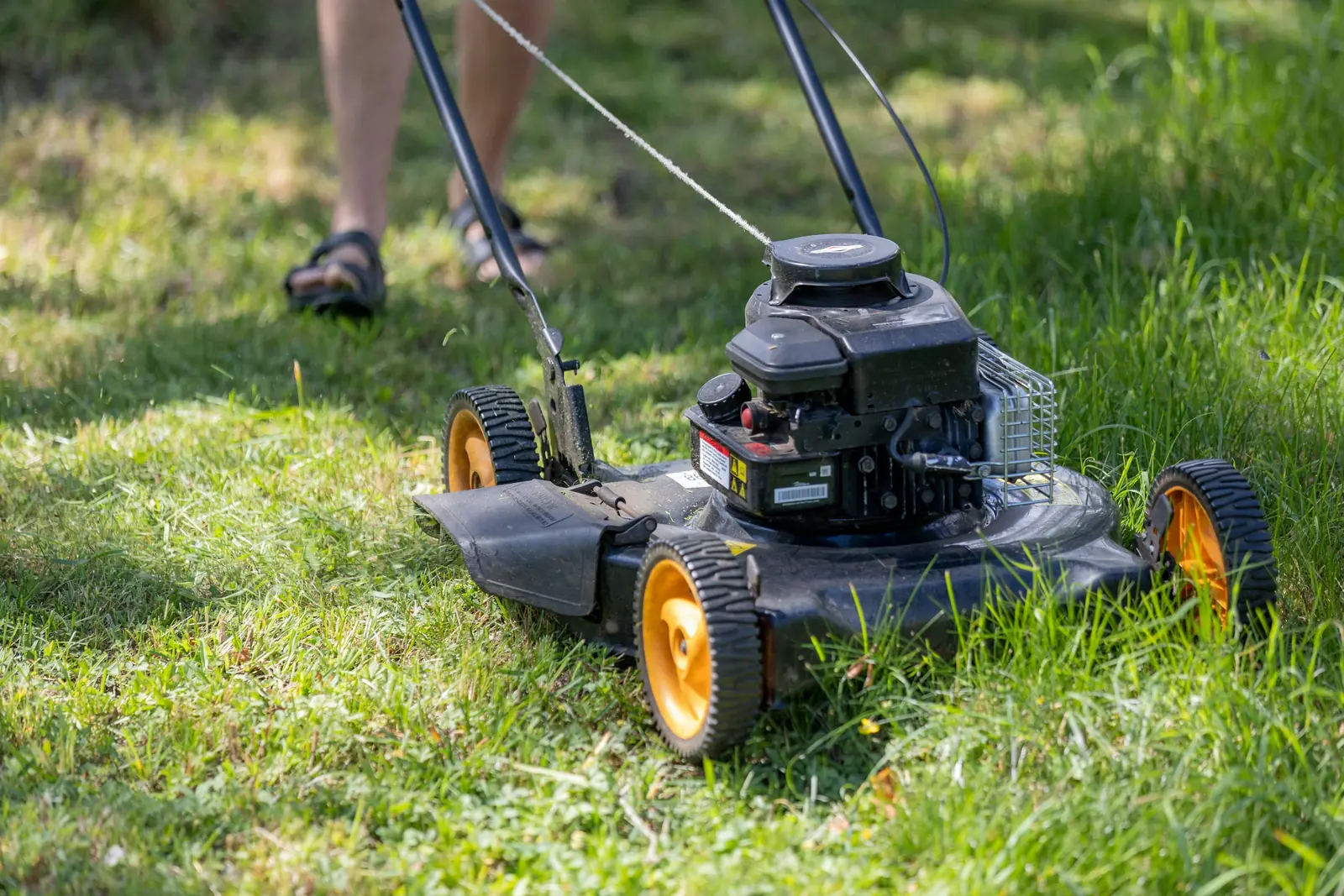
Discover professional mowing techniques for a dense, green, and healthy lawn. Cutting height, frequency, mowing pattern: everything you need to know.
Table of Contents8 sections
Table of Contents
Why is Mowing So Important?
Mowing is much more than just an aesthetic chore. It's the most frequent and crucial maintenance operation for the health of your lawn. A well-executed mow stimulates tillering (the multiplication of grass blades), strengthens the root system, and helps your turf resist diseases, drought, and weeds.
The One-Third Rule: The Fundamental Principle
The golden rule of mowing is to never cut more than one-third of the grass blade's height in a single session. For example, if your grass is 9 cm tall, don't cut it shorter than 6 cm. Cutting too short stresses the plant, weakens the roots, and encourages the growth of weeds.
What Cutting Height to Choose?
The ideal height depends on your grass type and the season:
- Kentucky Bluegrass: 6 to 8 cm (2.5 to 3 inches)
- Tall Fescue: 7 to 10 cm (3 to 4 inches)
- Perennial Ryegrass: 5 to 7 cm (2 to 3 inches)
- Bermuda Grass: 2 to 4 cm (1 to 1.5 inches)
In summer, during periods of intense heat, raise the cutting height by about 1 cm to protect the roots and retain soil moisture.
Help shape what comes next for LawnFan
The app is not available yet. Join the interest list for the beta planned for winter 2026–2027, or choose the newsletter for lawn tips and new articles.
Which signup should I choose?
Beta interest list: For expressing interest in testing the upcoming app. The button opens the form on the home page; invitations and timing will be confirmed later. Access is not guaranteed, and this signup does not subscribe you to the newsletter.
Newsletter: For seasonal tips, articles and project updates by email. The button takes you to the form at the end of this article’s content. You explicitly choose to receive these emails; this does not request beta access.
The Ideal Mowing Frequency
During active growth periods (spring and fall), mow once or twice a week. In the summer, when growth slows down, once a week or every two weeks may be sufficient. The key is to follow the one-third rule rather than a rigid schedule.
The Mowing Pattern: Vary Your Directions
Alternate your mowing direction with each session. If you mowed north-south last time, mow east-west this time. This technique:
- Prevents the grass from leaning in one direction
- Reduces soil compaction caused by the mower's wheels
- Creates a professional "striping" visual effect
Your Mower's Maintenance
Sharp blades are essential. Dull blades tear the grass blades instead of cutting them cleanly, which:
- Gives the lawn a brownish appearance
- Creates entry points for diseases
- Increases plant stress
Sharpen your blades at least twice a season, or after every 20 to 25 hours of use.
Should You Bag the Clippings?
In most cases, leave the clippings on the lawn! This practice, called "grasscycling," is beneficial because:
- The clippings decompose quickly and return nutrients to the soil
- They can provide up to 25% of your lawn's nitrogen needs
- They help retain soil moisture
Only bag the clippings if they form thick clumps that could smother the grass.
Mistakes to Avoid
- Mowing wet grass: the blades stick together, and the cut is uneven
- Scalping the lawn: cutting too short exposes the soil and encourages weeds
- Always mowing in the same direction: creates ruts and leaning grass
- Neglecting blade sharpening: causes visible damage to the blades
With LawnFan, receive personalized mowing reminders based on your lawn's actual growth and local weather conditions.