
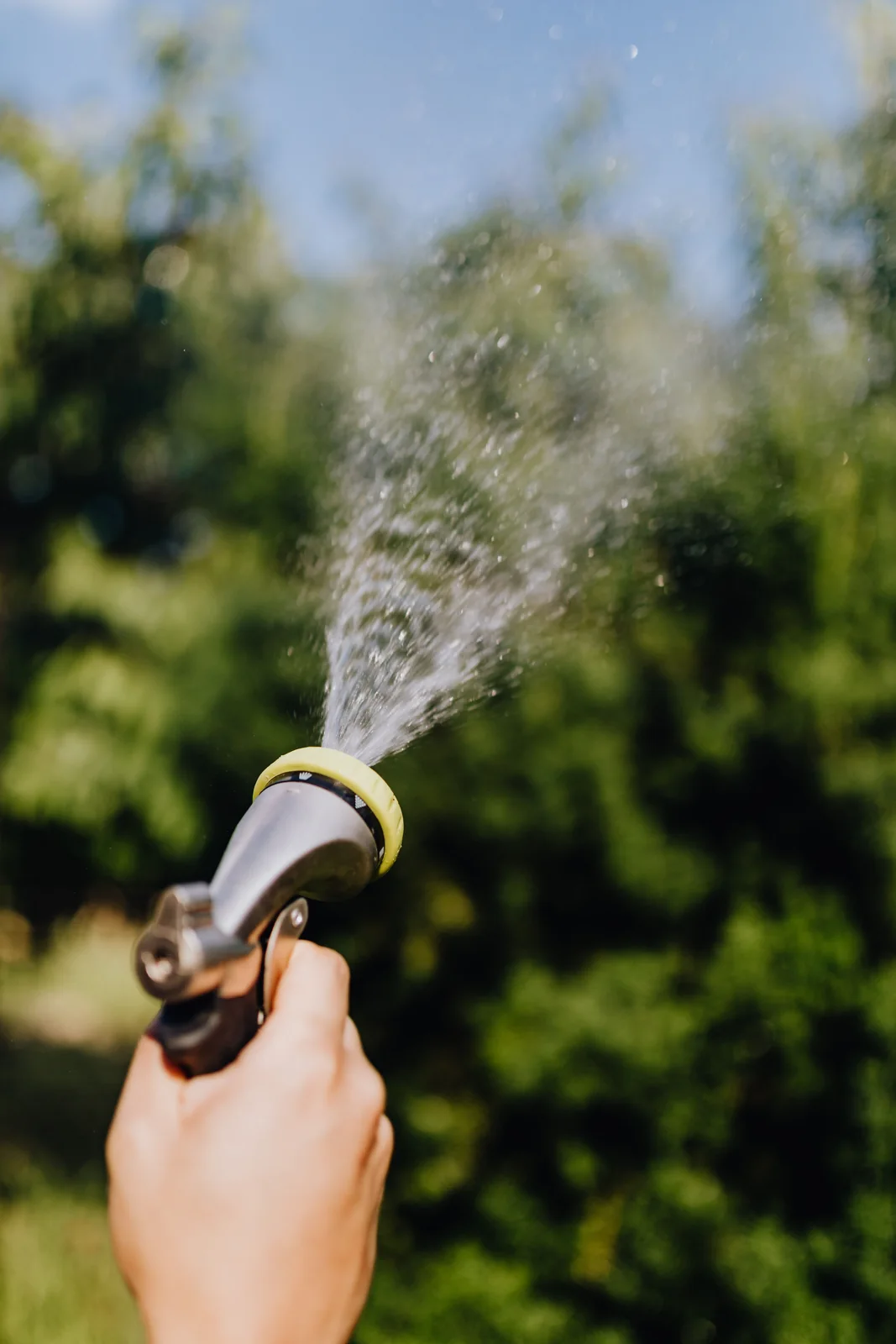
Watering is an art that requires precision. Too much or not enough can both be harmful. Here's how to water your lawn effectively while minimizing waste.
Table of Contents8 sections
Table of Contents
The Basics of Watering
A healthy lawn needs about 1 inch (2.5 cm) of water per week, including rain. But how you distribute that water is just as important as the amount.
The Principle of Deep, Infrequent Watering
Rather than watering a little every day, opt for deep, spaced-out watering sessions. This technique:
- Encourages roots to grow deeper
- Makes the lawn more drought-resistant
- Reduces the risk of fungal diseases
- Lowers overall water consumption
Goal: 2 to 3 watering sessions per week of 20 to 30 minutes each, rather than 7 short 10-minute waterings.
The Best Time to Water
Early in the morning, between 5 a.m. and 9 a.m., is the ideal time to water your lawn. Here's why:
- Less evaporation: temperatures are cooler
- The wind is usually calm: better distribution
- The grass dries during the day: reduces the risk of fungal diseases
- Optimal water pressure: less demand on the municipal system
What to Absolutely Avoid
- Evening watering: the grass stays wet all night, promoting fungi
- Watering in direct sunlight: up to 50% of the water evaporates before reaching the roots
Help shape what comes next for LawnFan
The app is not available yet. Join the interest list for the beta planned for winter 2026–2027, or choose the newsletter for lawn tips and new articles.
Which signup should I choose?
Beta interest list: For expressing interest in testing the upcoming app. The button opens the form on the home page; invitations and timing will be confirmed later. Access is not guaranteed, and this signup does not subscribe you to the newsletter.
Newsletter: For seasonal tips, articles and project updates by email. The button takes you to the form at the end of this article’s content. You explicitly choose to receive these emails; this does not request beta access.
How to Measure the Amount of Water
Place several containers (tuna cans or cups) on your lawn and run your sprinklers. Measure the time it takes to collect 1 inch (2.5 cm) of water. This is your baseline watering time.
Signs Your Lawn Needs Water
- The Footprint Test: walk on your grass. If the blades don't spring back after a few seconds, it's time to water.
- Blue-Gray Color: a lawn that is starting to lack water will take on a bluish tint.
- Curled Leaves: the blades fold in on themselves to reduce the surface area for evaporation.
- The Screwdriver Test: if you can't easily push a screwdriver into the ground, the soil is too dry.
Watering Systems
Oscillating Sprinklers
- Good coverage for rectangular areas
- Inexpensive and easy to move
- Distribution can sometimes be uneven
Rotary Sprinklers
- Ideal for large areas
- Good distribution uniformity
- Adjustable range
In-Ground Irrigation Systems
- Most uniform distribution
- Programmable and automatable
- Higher initial investment
Drip Irrigation
- Excellent for adjacent borders and flowerbeds
- Very water-efficient
- Less suitable for large lawn areas
Adapting Watering to Your Soil
- Clay soil: water slowly and for a long time, as water penetrates with difficulty
- Sandy soil: water more frequently but for shorter periods, as water drains quickly
- Loamy soil: the happy medium, absorbs and retains water well
Saving Water: Best Practices
- Collect rainwater: install rain barrels
- Adjust according to the weather: no need to water if it's going to rain tomorrow
- Keep your grass longer in the summer: the shade from the blades reduces evaporation
- Aerate your soil: better infiltration means less runoff
- Use mulch: around trees and borders to retain moisture
LawnFan monitors rain forecasts and automatically adjusts your watering recommendations to prevent waste.