
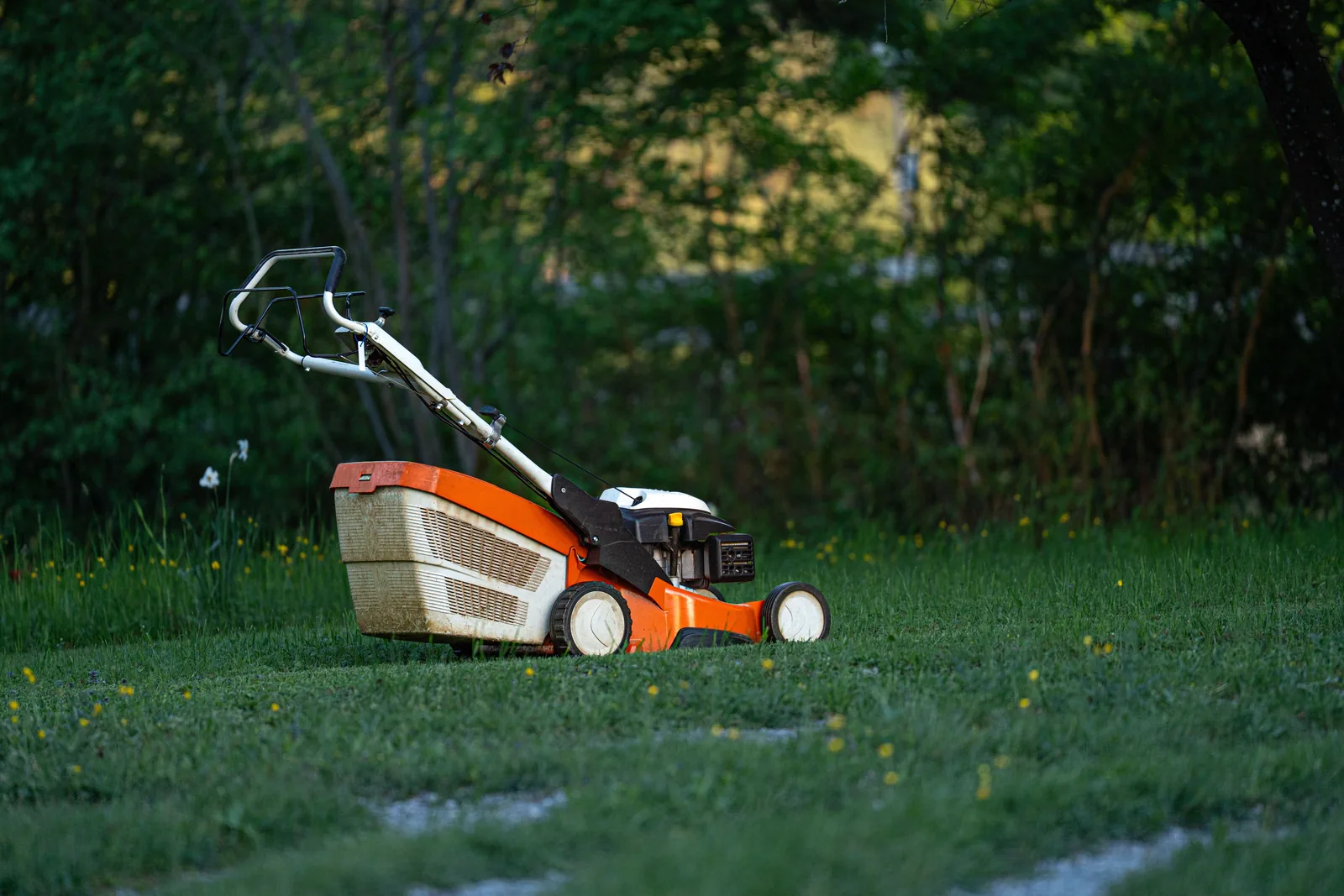
Review your lawn season, inventory your equipment and choose one priority before buying for next year.
Table of Contents8 sections
Table of Contents
Take stock before you shop
Your next season does not need to start with a shopping cart.
When you want to improve your lawn, it is tempting to look right away for the right bag of seed, the right fertilizer, or a new tool. Before spending, however, one question deserves a place: what did the past season actually teach you?
By late November or December, snow may already cover the yard. You can still prepare for what comes next using your notes, photos, and past purchases. This review does not require working on frozen, snow-covered, or waterlogged ground. Its purpose is to support better decisions later, not to invent one last urgent intervention.
1. Review the results, not just the purchases
Start with what worked well. Did a routine adjustment make maintenance easier? Did part of the yard develop as you had hoped? Were you able to spend less time on a task? Also note what remains uncertain.
Then gather your purchases and interventions: what you used, in which area, and for what purpose. If you do not know whether a product helped, write that down. An uncertain result is neither evidence of effectiveness nor a reason to buy again automatically.
The review is not about making a diagnosis from a photo. “This area remains thin” is an observation. “It needs fertilizer” is a hypothesis. Water that lingers after rain, limited sunlight, or frequent foot traffic are other facts worth recording, not already confirmed causes.
This distinction gives you a list of questions to clarify when conditions are appropriate again. It is more useful than a list of products chosen without knowing why.
2. Take inventory before making a shopping list
Look at what you already own: tools, equipment, and leftover products. For each item, keep the information on the label, and check its condition and the manufacturer’s instructions. The fact that a product is still in the shed does not confirm that it can be used again or that it meets the next need.
For equipment, ask whether it is working, suited to the area, and useful for your goal. Does a mower, spreader, or rake need maintenance? Does a seldom-used piece of equipment really need to be replaced?
Buying is not the only option: having something serviced, borrowing, renting, or buying nothing may also be appropriate. Compare these possibilities based on intended use and total cost, rather than on how new the model is.
A sale can make a purchase less expensive. It does not create the need that justifies it.
Help shape what comes next for LawnFan
The app is not available yet. Join the interest list for the beta planned for winter 2026–2027, or choose the newsletter for lawn tips and new articles.
Which signup should I choose?
Beta interest list: For expressing interest in testing the upcoming app. The button opens the form on the home page; invitations and timing will be confirmed later. Access is not guaranteed, and this signup does not subscribe you to the newsletter.
Newsletter: For seasonal tips, articles and project updates by email. The button takes you to the form at the end of this article’s content. You explicitly choose to receive these emails; this does not request beta access.
3. Choose one priority and identify missing information
The next season does not require solving the entire yard all at once. Choose one priority: understand an area that remains thin, reduce maintenance time, or manage your spending more effectively.
Then specify what needs to be checked. Site conditions matter: the University of Minnesota recommends selecting turfgrass species according to light, moisture, and soil type. Its examples are tailored to Minnesota, but this principle is a reminder that one mix is not a universal answer for every yard. 3
New seeding alone will not eliminate a drainage problem or limited light. Purchasing seed and deciding when to use it should follow an assessment of the need, not come before it.
Hypothetical example: water remains near an entrance after rain. The review concludes neither that compaction is the cause nor that an aerator should be rented. The first priority is to understand this observation. This is not a testimonial or a promise of savings.
4. Confirm the need before planning products
Lime and fertilizer are not automatic starting points. A laboratory soil test can provide information including pH, organic matter, phosphorus, and potassium. Depending on the service offered, the report may guide fertilizer and soil amendment recommendations. 1
The Montréal Botanical Garden recommends a soil test to assess calcium needs before determining an amount of lime. A less vigorous lawn alone is therefore not enough to justify liming. 2
This does not mean every homeowner should do the same test every year. It becomes useful when its results inform a decision. It does not correct shade or drainage on its own, and it does not replace observing the yard.
The same logic applies to aeration: the Botanical Garden links it to overly compacted soil, not to an identical requirement for every lawn. 2 Before budgeting for an intervention, it is important to understand what justifies it.
Excessive nutrient inputs can also create environmental concerns. Soil-based recommendations help select the inputs needed instead of adding them out of habit. 1
5. Give every expense a purpose
Write one simple sentence:
Next season, I want to improve ___; before buying, I need to check ___.
Your budget can then take into account the area involved, the equipment available, the time required, and the follow-up needed. A product that costs less to buy is not necessarily the most suitable choice; an expensive tool does not become useful simply because it performs well.
The goal is not to never buy anything. It is to be able to explain the role of every expense. No method guarantees a specific amount of savings for every homeowner.
The LawnFan vision: merit before the brand
This is also the direction Maxime wants to give LawnFan: advice that starts with the member’s needs, with transparent recommendations. Merit before the brand.
Ideas to make members’ future purchases more advantageous have already been thought through. Details are still to come. If collaborations take shape, they will need to benefit members without dictating recommendations.
The app is still in development. These benefits are not available offers, and any possible savings remain to be confirmed.
For now, keep your review, one priority, and the questions that need clarification. The next season can begin with a better-prepared decision, not with a fuller shed.
— LawnFan Team
Sources
1 — UMN Extension — Soil testing for lawns and gardens
2 — Montréal Botanical Garden — Aeration, topdressing, liming, and lawn fertilization
3 — UMN Extension — Buying turfgrass seed for Minnesota lawns